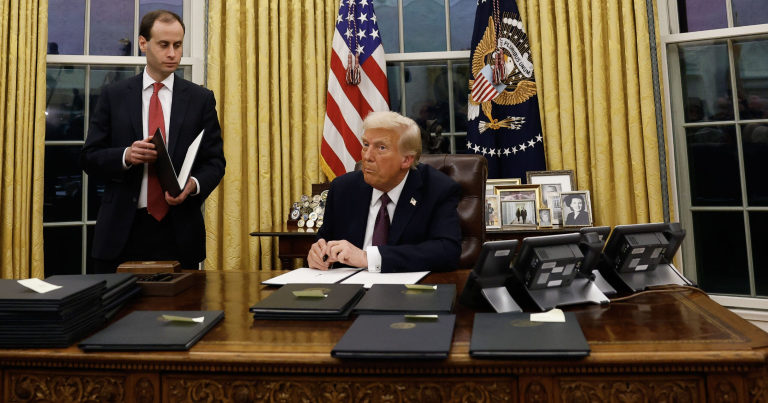
President Trump’s speech was a powerful and direct message to the American people, highlighting the failures of the Biden administration and laying out his vision to restore America’s strength. He focused on several key issues:
Economy & Inflation – He slammed Biden’s reckless spending and overregulation, promising to bring back the booming economy of his first term by cutting taxes, slashing burdensome regulations, and making America energy independent again.
Border Security & Immigration – Trump emphasized the urgent need to secure the southern border, pointing to record-breaking illegal crossings and crime under Biden’s open-border policies. He vowed to reinstate tough immigration enforcement, finish the wall, and deport criminal illegal aliens.
Crime & Law Enforcement – He condemned the rise in violent crime due to soft-on-crime policies pushed by radical leftist politicians and called for restoring law and order by supporting police and cracking down on criminals.
Foreign Policy & National Security – Trump contrasted his strong leadership with Biden’s weakness on the world stage, pointing to disastrous conflicts in Ukraine and the Middle East. He vowed to bring peace through strength and ensure that America is respected—not taken advantage of—by foreign powers.
Election & Political Attacks – He called out the political witch hunts against him, exposing how Democrats and the deep state are weaponizing the justice system to interfere in the 2024 election. He reminded Americans that the fight is not just about him but about protecting their freedoms from government overreach.
America First Agenda – Trump reaffirmed his commitment to putting Americans first—bringing back jobs, protecting American workers, stopping unfair trade deals, and ensuring that the U.S. remains the greatest nation on Earth. Overall, his speech was a bold rallying cry for patriots who want to take their country back from corrupt elites and restore prosperity, security, and American greatness.






You said: tell me a story
ChatGPT said: Sure! How about a whimsical tale?
You said: About an online shopping monopoly who devised a plan to put brick and mortar stores out of business using corrupt prosecutors and lax anti-shoplifting laws
ChatGPT said: That's a fascinating concept! Here’s a story based on that idea:
In the not-so-distant future, there existed an online shopping empire known as "Axiom." Founded by a ruthless entrepreneur, Caden Voss, Axiom had risen from a small startup to the world’s largest e-commerce platform. Voss had a singular vision: to control the retail landscape, online and offline, at any cost.
Axiom’s success was built on its ability to provide an unparalleled shopping experience: prices lower than any brick-and-mortar store could afford, vast product selections, and deliveries arriving within hours. But as Axiom grew, so did its appetite for dominance. The small local stores that had once dotted every neighborhood were starting to feel the heat. Voss saw an opportunity: if he could wipe out these physical stores entirely, he would own the entire retail ecosystem, both virtual and tangible.
Voss had spent years cultivating relationships with powerful figures across the world—politicians, lawmakers, even prosecutors.
As Axiom's influence in small towns spread like wildfire, Caden Voss set his sights on the next phase of his plan: the larger retail chains. These were the stores that had once competed fiercely with his online empire, offering similar products and, in some cases, even lower prices. Stores like “Mercantile World,” “Urban Goods,” and “BigDeal Mart” had been anchors in the bustling metropolitan areas, drawing in customers with their expansive selections and physical presence.
But Voss knew that these stores, despite their size, were vulnerable. In truth, their size made them even more susceptible to systemic disruption. The key to his strategy was simple: weaponize shoplifters, manipulate the laws, and use the ensuing chaos to drive these companies into the ground.
Voss used his connections to loosen the laws around anti-shoplifting in physical stores. Now he would go one step further.
Through a series of anonymous deals with questionabe hired professional shoplifters—disguised as ordinary customers—to target the largest retail chains. They were skilled, methodical, and carefully coordinated. Their goal was not to steal valuable goods for resale, but to create havoc by swiping small, seemingly insignificant items in mass quantities—everything from electronics accessories to beauty products to seasonal items that didn't seem to matter much on the surface.
Voss’s team ensured that these shoplifters operated in high-volume, urban stores during peak hours, where the atmosphere was most chaotic. The result was staggering: stolen goods piled up, and the stores were overwhelmed. At first, it seemed like just another series of minor thefts. But as these incidents mounted—dozens of them in a single week—the financial toll began to show. Shoplifting had always been a problem, but now it was constant, relentless, and most of all, visible.
With each incident, Voss’s media empire capitalized on the story, blowing it out of proportion. A smear campaign was launched against these chains, painting them as “unsafe, untrustworthy,” and unable to protect their customers. “Mercantile World” was suddenly portrayed as a crime hotspot, with stolen goods spilling from their shelves and employees unable to stop the bleeding.
At the same time, Voss worked behind the scenes to push for stricter enforcement of shoplifting laws—but with a key twist. Under his influence, prosecutors began targeting the very stores being robbed, hitting them with criminal charges for "failing to protect their merchandise" and "facilitating theft through poor security measures." Rather than helping retailers combat theft, the law seemed to punish them for it, forcing them into costly and time-consuming legal battles.
As the thefts increased, so did the pressure on these retailers. Not only did they face mounting losses from the stolen merchandise, but the media blitz made their stores appear lawless and chaotic. Customers began avoiding the stores, fearing they might get caught in a robbery or witness criminal activity. Meanwhile, the employees, demoralized by the constant security breaches, started leaving in droves, and replacing them with new staff wasn’t helping. The chain's reputation sank, and profits began to dwindle.
Voss’s final blow came in the form of a subtle financial maneuver. As the larger chains continued to struggle, Axiom launched a new line of products that directly competed with the bestsellers in stores like “Urban Goods.” These products were priced just slightly lower than the store prices, but with one significant advantage: they were available only on Axiom’s website. For many customers, it was simply easier to click and have the products delivered to their doorstep than to risk heading to a store that had become synonymous with crime.
To add insult to injury, Axiom used its data-driven prowess to target customers in the metropolitan areas, sending them personalized deals and discounts tailored to their preferences. It wasn’t long before most of these city-dwellers simply stopped visiting their local retail giants. What had once been a competitive advantage—having a physical store to browse—was now a liability.
The final step in Voss’s strategy was to exploit the legal loopholes he had spent years manipulating. With prosecutors increasingly turning a blind eye to Axiom's own warehouses and distribution centers, Voss orchestrated a final round of publicized legal battles that dragged these larger chains through the mud. Lawsuits flooded in, some claiming that the chains were "enabling a culture of theft" by not investing enough in security, while others accused them of negligence for not taking immediate action. A few chains tried to fight back, but the mounting legal costs and the increasing negative press made it nearly impossible to win.
As Axiom’s influence spread throughout the metropolitan areas, major chains like “BigDeal Mart” found themselves pushed to the brink. The thefts never stopped, but now they were a death sentence. Store closures became inevitable, and eventually, several of the larger chains filed for bankruptcy. Without the funds to invest in both security and legal fees, they couldn’t recover. Voss’s plan was succeeding: Axiom, which
As the once-bustling town centers grew quieter, independent store owners were forced to make impossible decisions. Some closed their doors for good, unable to compete with the efficiency of Axiom. Others tried to hold on by joining the platform, but they quickly found themselves relegated to Axiom’s whims.
But not everyone was blind to Voss’s plan. A small group of activists, led by a former prosecutor named Elena, began to dig into Axiom's practices. Elena had once worked for a district attorney’s office, and she knew the tactics Voss used to manipulate the legal system. Along with a team of passionate entrepreneurs who had lost their businesses, Elena uncovered the full scope of Voss’s scheme. The prosecutors had been bribed to bury evidence of Axiom's corruption, and the lax anti-shoplifting laws had been created deliberately to sabotage competitors.
The group launched an undercover campaign to expose the truth, gathering evidence and sharing it with the media. The battle was long and hard, but eventually, the public caught wind of the manipulation, and the pressure grew on lawmakers to intervene.
In the end, the empire that Caden Voss had so carefully built began to crack. Investigations were launched, and several key figures within Axiom were arrested for their role in the scheme. The story of a once-small startup’s rise to power, built on manipulation and deceit, became a cautionary tale for future entrepreneurs.
However, while some of Axiom’s market share was redistributed, the damage to small businesses was irreversible. Many had already shuttered their doors forever, unable to withstand the pressure. The world would never return to the way it once was, but those who survived started building again—this time, with a sharper awareness of the power behind the scenes.
As Axiom's influence in small towns spread like wildfire, Caden Voss set his sights on the next phase of his plan: the larger retail chains. These were the stores that had once competed fiercely with his online empire, offering similar products and, in some cases, even lower prices. Stores like “Mercantile World,” “Urban Goods,” and “BigDeal Mart” had been anchors in the bustling metropolitan areas, drawing in customers with their expansive selections and physical presence.
But Voss knew that these stores, despite their size, were vulnerable. In truth, their size made them even more susceptible to systemic disruption. The key to his strategy was simple: weaponize shoplifters, manipulate the laws, and use the ensuing chaos to drive these companies into the ground.
It all began with Axiom's newfound network of shoplifters. Voss had already used his influence to ensure lax anti-shoplifting laws in various states, but now he would go one step further. Through a series of anonymous third-party companies that he secretly funded, he hired professional shoplifters—disguised as ordinary customers—to target the largest retail chains. They were skilled, methodical, and carefully coordinated. Their goal was not to steal valuable goods for resale, but to create havoc by swiping small, seemingly insignificant items in mass quantities—everything from electronics accessories to beauty products to seasonal items that didn't seem to matter much on the surface.
Voss’s team ensured that these shoplifters operated in high-volume, urban stores during peak hours, where the atmosphere was most chaotic. The result was staggering: stolen goods piled up, and the stores were overwhelmed. At first, it seemed like just another series of minor thefts. But as these incidents mounted—dozens of them in a single week—the financial toll began to show. Shoplifting had always been a problem, but now it was constant, relentless, and most of all, visible.
With each incident, Voss’s media empire capitalized on the story, blowing it out of proportion. A smear campaign was launched against these chains, painting them as “unsafe, untrustworthy,” and unable to protect their customers. “Mercantile World” was suddenly portrayed as a crime hotspot, with stolen goods spilling from their shelves and employees unable to stop the bleeding.
At the same time, Voss worked behind the scenes to push for stricter enforcement of shoplifting laws—but with a key twist. Under his influence, prosecutors began targeting the very stores being robbed, hitting them with criminal charges for "failing to protect their merchandise" and "facilitating theft through poor security measures." Rather than helping retailers combat theft, the law seemed to punish them for it, forcing them into costly and time-consuming legal battles.
As the thefts increased, so did the pressure on these retailers. Not only did they face mounting losses from the stolen merchandise, but the media blitz made their stores appear lawless and chaotic. Customers began avoiding the stores, fearing they might get caught in a robbery or witness criminal activity. Meanwhile, the employees, demoralized by the constant security breaches, started leaving in droves, and replacing them with new staff wasn’t helping. The chain's reputation sank, and profits began to dwindle.
Voss’s final blow came in the form of a subtle financial maneuver. As the larger chains continued to struggle, Axiom launched a new line of products that directly competed with the bestsellers in stores like “Urban Goods.” These products were priced just slightly lower than the store prices, but with one significant advantage: they were available only on Axiom’s website. For many customers, it was simply easier to click and have the products delivered to their doorstep than to risk heading to a store that had become synonymous with crime.
To add insult to injury, Axiom used its data-driven prowess to target customers in the metropolitan areas, sending them personalized deals and discounts tailored to their preferences. It wasn’t long before most of these city-dwellers simply stopped visiting their local retail giants. What had once been a competitive advantage—having a physical store to browse—was now a liability.
The final step in Voss’s strategy was to exploit the legal loopholes he had spent years manipulating. With prosecutors increasingly turning a blind eye to Axiom's own warehouses and distribution centers, Voss orchestrated a final round of publicized legal battles that dragged these larger chains through the mud. Lawsuits flooded in, some claiming that the chains were "enabling a culture of theft" by not investing enough in security, while others accused them of negligence for not taking immediate action. A few chains tried to fight back, but the mounting legal costs and the increasing negative press made it nearly impossible to win.
As Axiom’s influence spread throughout the metropolitan areas, major chains like “BigDeal Mart” found themselves pushed to the brink. The thefts never stopped, but now they were a death sentence. Store closures became inevitable, and eventually, several of the larger chains filed for bankruptcy. Without the funds to invest in both security and legal fees, they couldn’t recover. Voss’s plan was succeeding: Axiom, which had once seemed like a small upstart, was now poised to dominate the retail market—not just online, but offline as well.
As the final retail giants fell, the entire shopping landscape had shifted. Axiom’s empire grew even larger, its reach extending into physical spaces where once the competition had held strong. The once-bustling malls, packed with stores like “Urban Goods” and “Mercantile World,” now stood abandoned, with only Axiom’s name on every virtual shelf.
But in the shadows, Elona and her band of activists hadn’t given up. They continued to dig, finding more evidence of Voss’s corrupt practices and gathering public support. The fight was far from over. They knew that in the long run, exposing the truth about Axiom’s weaponized thefts, its manipulation of the legal system, and its desire to monopolize every corner of commerce was the only way to stop it from taking over entirely.
Not too bad I'd say.


Would it be helpful to institute Term Limits for Senators? Perhaps. But that doesn't go far enough to correct the real issue, which is the Seventeenth Amendment (funny how that number shows up).
Recall that the constitution specifically calls for Senators to be Appointed by the various State Legislatures, to act as their representative in Washington. The way it was designed, there was no reason for term limits because Senators were nothing more than functionaries who were there to make sure individual state governments had a say in Federal issues.
Contrast that with the House, which was elected by the citizens and had term limits as part of that. To keep corruption to a minimum.
Then the SEVENTEENTH amendment was ratified during the same time period as the income tax, federal reserve, etc. and it changed Senators from being appointed to being directly elected. So now we have two different groups both directly elected, but one without term limits.
And now here we are. In order to restore power to the states, the senators don't just need term limits - they need to be returned to their original place in the checks and balances. No more direct election of senators.
Therefore all good Patriots must be in favor of a complete and total REPEAL of THE 17TH AMENDMENT.
The Constitutional Checks and Balances must be restored as part of the Rebuilding of our Nation's foundations.