I just don't think that tariffs are going to bring manufacturing back to America like so many people believe it will.
For one reason, like you've said, there are so many regulations in the US that other countries don't have.
And companies aren't going to be able to find workers in the US that will work for $2 per day, like they do in India and other really poor parts of the world.
The key part that many don't mention is that every person that starts a business does so to earn money which requires profits. If a business can move some work to countries where profits can be increased to a large enough degree to make it worth the process then that's simply what they do. Businesses won't be forced to make less profit if they can avoid it. i'm not defending businesses as most already rip us off massively but profit is still the primary goal of businesses.
The problem for us is that as consumers we are always the ones that end up paying the bill so to speak. If a business were forced to source items from American sources, the entire product chain would be more costly and at each section prices will increase so that each business in the chain maintains their profit margins and by time it gets to the consumer, the consumer is stuck paying the calculated higher price so that billion dollar businesses can make billions more in profits.
The minimum wage is a good example. Force McDonalds to pay people a living wage in a job that was never intended to provide a living wage and the result is computers where customers handle placing their own orders without a human at a register. In some instances even robots being tested to handle some orders. The end result begins with price increases but then comes employees losing their jobs due to budget cuts. In the end many people lose their jobs and customers see higher prices.
If businesses were made to or lured back to America, their prices would increase so that they yet again are able to maintain desired profit margins. There's no good solution to it because if a percentage cap were placed on profits then businesses would just stay in countries without such regulations. Tariffs in theory might be a good idea to some but businesses always seek their profits and if they don't make enough profit then they risk closures.
America would need to make offers that were appealing enough to lure businesses back here. Anything forced rarely ever yields positive results. The global trade is simply what it is and undoing it at this point isn't really a realistic option. The world cannot revert back to the days of wooden ships and communication taking weeks or months.
I agree with much of what you've written, but would like to provide a counterpoint to a couple of things:
The minimum wage is a good example. Force McDonalds to pay people a living wage in a job that was never intended to provide a living wage
The minimum wage was always meant to be a living wage.
“By living wages, I mean more than a bare subsistence level—I mean the wages of a decent living.” -FDR on the Fair Labor Standards Act which established the minimum wage in 1938.
McDonalds was created in the 1940s, and really began spreading around the country in the early 1960s. Yes, back in the 1960s, teenagers was a significant part of their workforce. But even then, they were paid a wage that was around today's equivalent of $13/hrs, which is much closer to a "living wage" than the $7.25 federal minimum wage today.
One big difference between then and now is that teenagers aren't the majority of workers earning a minimum wage today. Teenagers are no longer a significant part of the workforce. There were more teenagers working then due to the baby boomers being the largest generation(they would have been teenagers from the very late 50s to the very early 80s), and because of changes in parenting over the years (parents tend to think teenagers should spend their time on studies and extra curriculum activities now). The idea that these jobs are still being held by teenagers is faulty. The vast majority of fast food jobs are held by adults.
and the result is computers where customers handle placing their own orders without a human at a register.
It doesn't matter what a person's wage is, they would be replaced by a machine anyway. A machine is much more reliable than a person, doesn't call in sick, doesn't slack off at work, doesn't get holidays off, doesn't insult the customers, doesn't misunderstand the orders, doesn't require an HR department, and doesn't cost an additional 40% of the employee's base salary for health benefits, retirement contribution, paid leave, etc...
Technology has always replaced human jobs, and keeping wages low will not stop it.
Looms replaced weavers, mechanical reapers and tractors replaced a significant number of farm workers, electric vacuums reduced the need for household help. These jobs were replaced by technology in the 1700s and 1800s. Well before minimum wage laws.
Technology is not just about cost savings in wage elimination. It's about efficiency, speed, and consistency. No matter how low wages are, businesses will always embrace technology over humans.
One of the biggest changes from the days of teenagers flipping burgers (who still earned a decent wage, compared to today's burger flipper) and today, is how the salary of company executives has skyrocketed in comparison to the average employees.
In the 1960s, the wage gap was around 20:1. That means the highest paid people in the company were being paid 20x what the lowest paid people were.
Today, the wage gap is 300:1. That means that the highest paid people in a company are being paid 300x what the lowest paid people are.
Obviously, large companies are completely able to pay their lowest earning employees better wages, they just don't.
And sadly, that's not going to change.
Just as you were pointing out, companies are more interested in making/keeping money than they are about being good wards of this earth (dumping hazardous materials all over the planet) or about being conscientious employers (preferring slave labor, which is frequently child slave labor).
So, no matter what wages here are, they're going to prefer to work overseas where they can get away with the reprehensible things they do. No matter what the tariffs are, they're not going to bring jobs back here. After all, the companies aren't the ones that ultimately are going to be paying those tariffs. We will be paying them. Because the companies are just going to increase the prices of their products to make up the difference. They're not going to eat the difference, out of the goodness of their hearts.
Criticizing the minimum wage here is not going to bring jobs back to the US. It's just going to continue hurting the people who need it the most while benefitting the people making 300x what they are.
Unfortunately, I don't see that ever really changing. 🤷♀️
Greed is always going to win. And rich companies/people are always going to be stuffing the pockets of politicians in order to keep minimum wage down.
So, until the population gets sick of this, and stops listening to politicians who are in the pockets of the corporations, nothing is ever going to change. Until the population gets sick of this, there will always be companies getting rich off the back of child labor all around the world.
But since the population doesn’t seem to care about any of this, and are just concerned about how cheap their hamburgers and Nikes and Iphones are, we're pretty much fucked.🤷♀️
This is where reduced Company tax comes into play which is a smart move. However, you are correct that it would normally result in higher cost of goods.

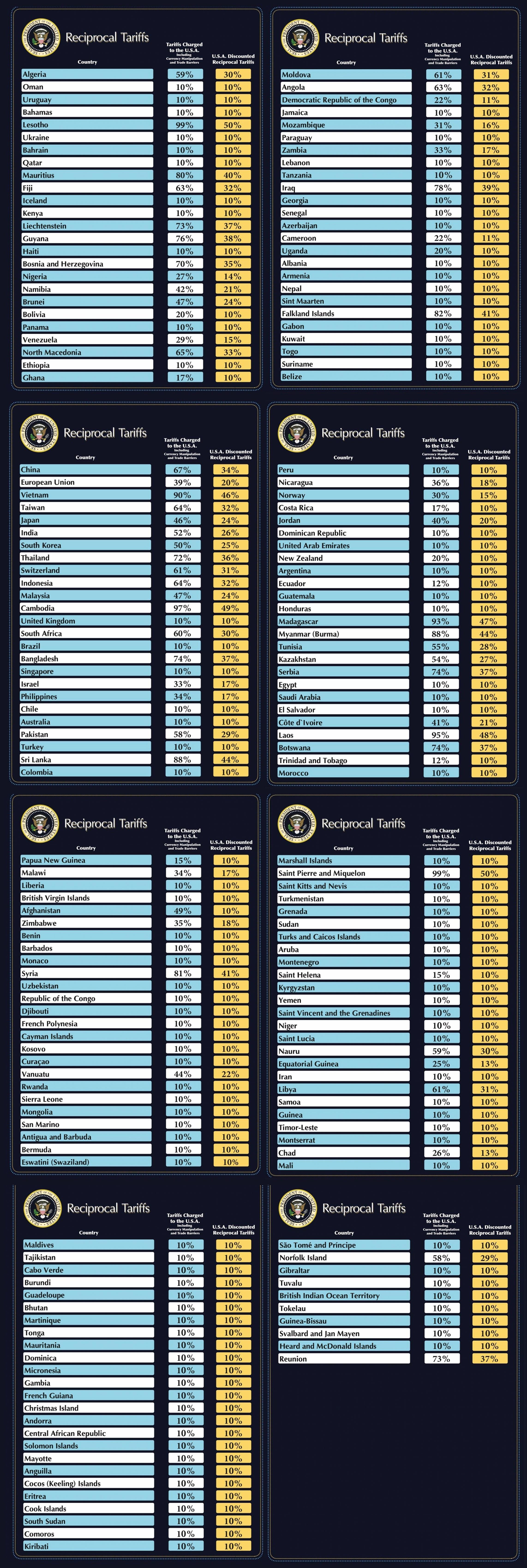

I just don't think that tariffs are going to bring manufacturing back to America like so many people believe it will.
For one reason, like you've said, there are so many regulations in the US that other countries don't have.
And companies aren't going to be able to find workers in the US that will work for $2 per day, like they do in India and other really poor parts of the world.
The key part that many don't mention is that every person that starts a business does so to earn money which requires profits. If a business can move some work to countries where profits can be increased to a large enough degree to make it worth the process then that's simply what they do. Businesses won't be forced to make less profit if they can avoid it. i'm not defending businesses as most already rip us off massively but profit is still the primary goal of businesses.
The problem for us is that as consumers we are always the ones that end up paying the bill so to speak. If a business were forced to source items from American sources, the entire product chain would be more costly and at each section prices will increase so that each business in the chain maintains their profit margins and by time it gets to the consumer, the consumer is stuck paying the calculated higher price so that billion dollar businesses can make billions more in profits.
The minimum wage is a good example. Force McDonalds to pay people a living wage in a job that was never intended to provide a living wage and the result is computers where customers handle placing their own orders without a human at a register. In some instances even robots being tested to handle some orders. The end result begins with price increases but then comes employees losing their jobs due to budget cuts. In the end many people lose their jobs and customers see higher prices.
If businesses were made to or lured back to America, their prices would increase so that they yet again are able to maintain desired profit margins. There's no good solution to it because if a percentage cap were placed on profits then businesses would just stay in countries without such regulations. Tariffs in theory might be a good idea to some but businesses always seek their profits and if they don't make enough profit then they risk closures.
America would need to make offers that were appealing enough to lure businesses back here. Anything forced rarely ever yields positive results. The global trade is simply what it is and undoing it at this point isn't really a realistic option. The world cannot revert back to the days of wooden ships and communication taking weeks or months.
I agree with much of what you've written, but would like to provide a counterpoint to a couple of things:
The minimum wage was always meant to be a living wage.
McDonalds was created in the 1940s, and really began spreading around the country in the early 1960s. Yes, back in the 1960s, teenagers was a significant part of their workforce. But even then, they were paid a wage that was around today's equivalent of $13/hrs, which is much closer to a "living wage" than the $7.25 federal minimum wage today.
One big difference between then and now is that teenagers aren't the majority of workers earning a minimum wage today. Teenagers are no longer a significant part of the workforce. There were more teenagers working then due to the baby boomers being the largest generation(they would have been teenagers from the very late 50s to the very early 80s), and because of changes in parenting over the years (parents tend to think teenagers should spend their time on studies and extra curriculum activities now). The idea that these jobs are still being held by teenagers is faulty. The vast majority of fast food jobs are held by adults.
It doesn't matter what a person's wage is, they would be replaced by a machine anyway. A machine is much more reliable than a person, doesn't call in sick, doesn't slack off at work, doesn't get holidays off, doesn't insult the customers, doesn't misunderstand the orders, doesn't require an HR department, and doesn't cost an additional 40% of the employee's base salary for health benefits, retirement contribution, paid leave, etc...
Technology has always replaced human jobs, and keeping wages low will not stop it. Looms replaced weavers, mechanical reapers and tractors replaced a significant number of farm workers, electric vacuums reduced the need for household help. These jobs were replaced by technology in the 1700s and 1800s. Well before minimum wage laws.
Technology is not just about cost savings in wage elimination. It's about efficiency, speed, and consistency. No matter how low wages are, businesses will always embrace technology over humans.
One of the biggest changes from the days of teenagers flipping burgers (who still earned a decent wage, compared to today's burger flipper) and today, is how the salary of company executives has skyrocketed in comparison to the average employees.
In the 1960s, the wage gap was around 20:1. That means the highest paid people in the company were being paid 20x what the lowest paid people were.
Today, the wage gap is 300:1. That means that the highest paid people in a company are being paid 300x what the lowest paid people are.
Obviously, large companies are completely able to pay their lowest earning employees better wages, they just don't.
And sadly, that's not going to change.
Just as you were pointing out, companies are more interested in making/keeping money than they are about being good wards of this earth (dumping hazardous materials all over the planet) or about being conscientious employers (preferring slave labor, which is frequently child slave labor).
So, no matter what wages here are, they're going to prefer to work overseas where they can get away with the reprehensible things they do. No matter what the tariffs are, they're not going to bring jobs back here. After all, the companies aren't the ones that ultimately are going to be paying those tariffs. We will be paying them. Because the companies are just going to increase the prices of their products to make up the difference. They're not going to eat the difference, out of the goodness of their hearts.
Criticizing the minimum wage here is not going to bring jobs back to the US. It's just going to continue hurting the people who need it the most while benefitting the people making 300x what they are.
Unfortunately, I don't see that ever really changing. 🤷♀️
Greed is always going to win. And rich companies/people are always going to be stuffing the pockets of politicians in order to keep minimum wage down.
So, until the population gets sick of this, and stops listening to politicians who are in the pockets of the corporations, nothing is ever going to change. Until the population gets sick of this, there will always be companies getting rich off the back of child labor all around the world.
But since the population doesn’t seem to care about any of this, and are just concerned about how cheap their hamburgers and Nikes and Iphones are, we're pretty much fucked.🤷♀️
This is where reduced Company tax comes into play which is a smart move. However, you are correct that it would normally result in higher cost of goods.